
The Explorer is a book, a poem, this project.
Introduction
This is the story of a book, The Explorer—its time, its place, and the people who connect with and cross its path.
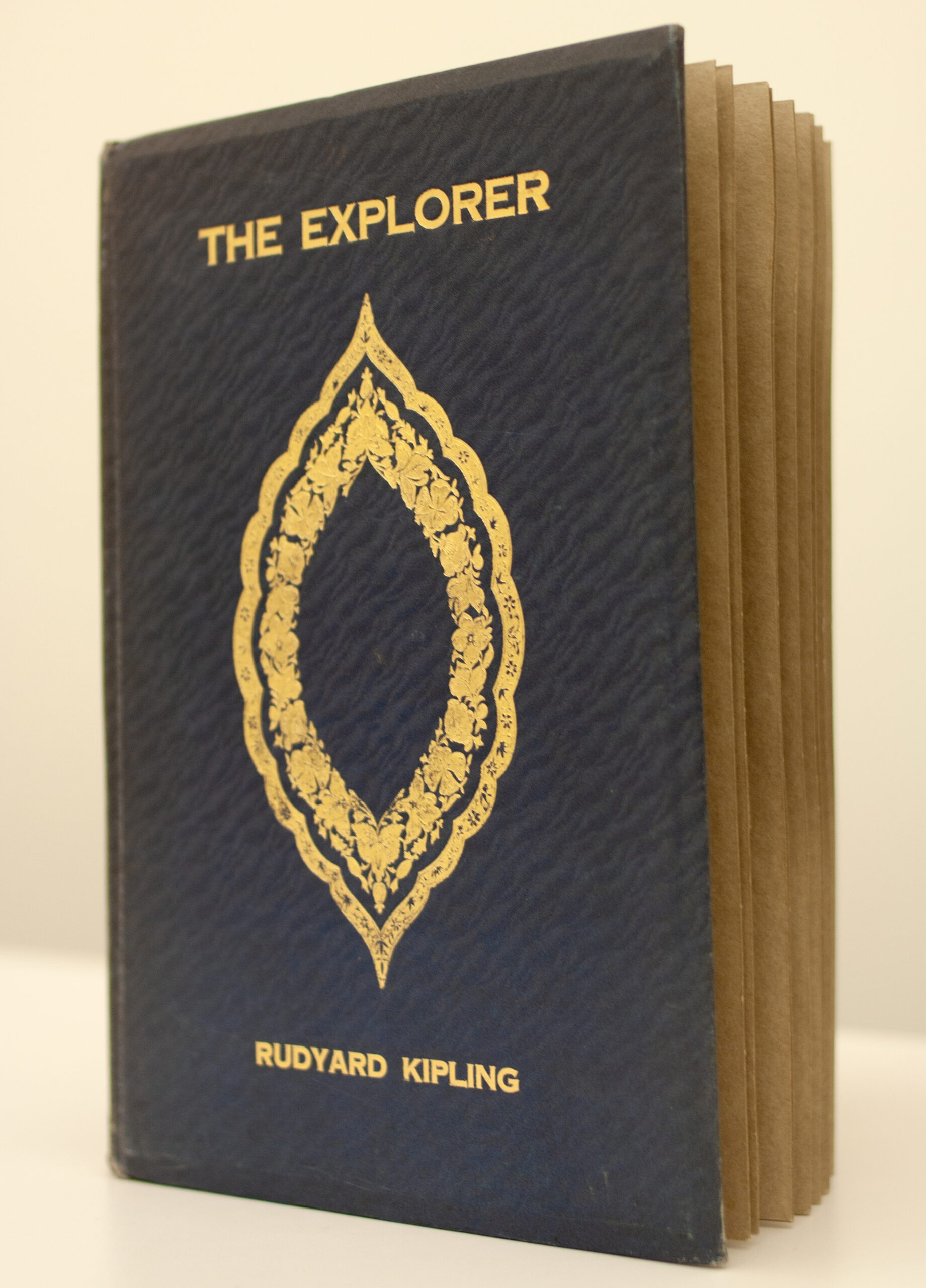
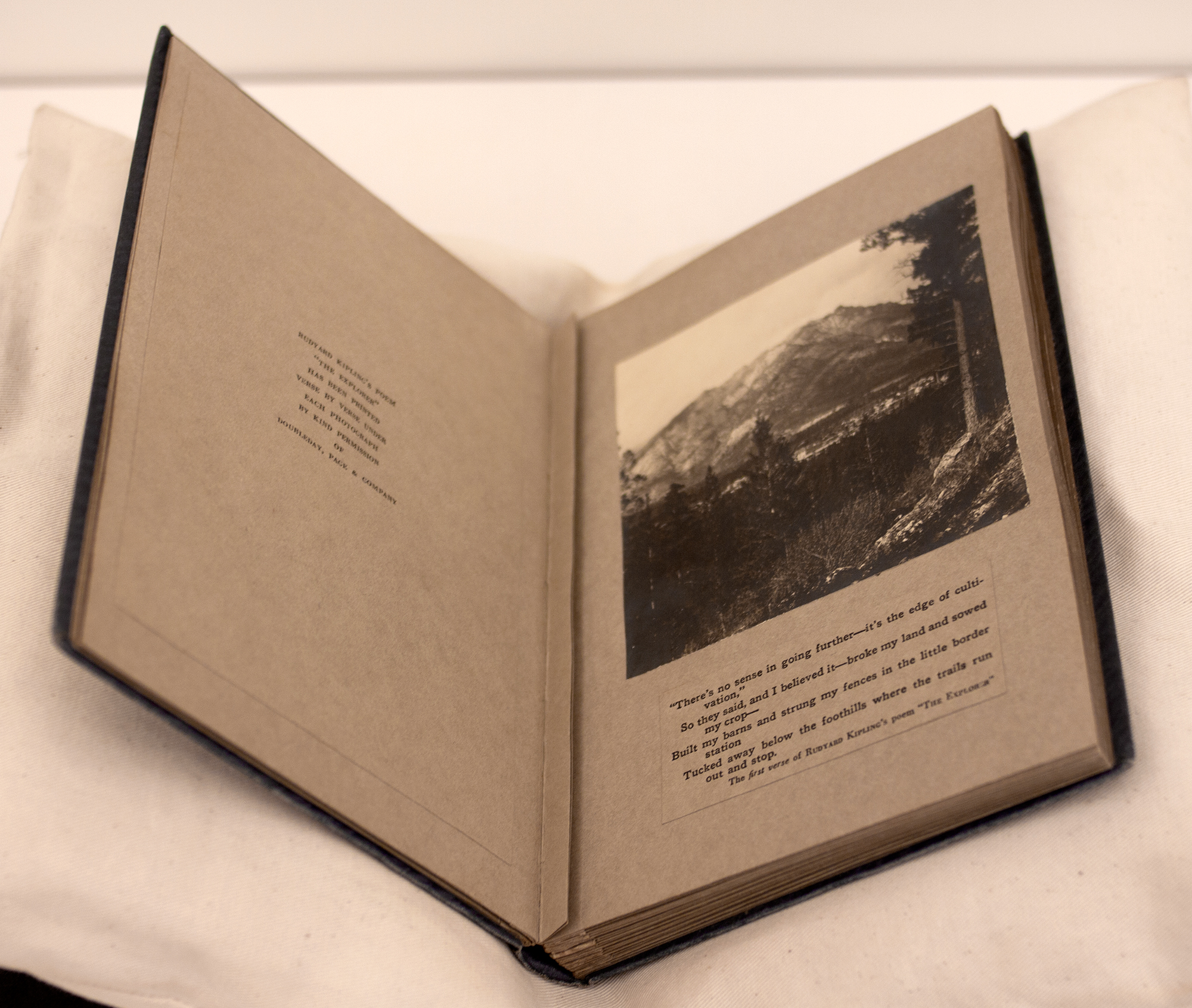
The Explorer, a republication of Rudyard Kipling’s poem of the same name, uses 18 photographs of “Wyoming’s wilderness and the Canadian Rockies” to illustrate each stanza. How the book is made—pasted photographs and text onto cardstock pages—its shiney silk binding that seems incongruitious with is hand made interior, and that fact that the poem, a personified British imperial mind-set in meter, is so easily read as a description of America western expanstionism, ignighted a deep curiosity in me, that I charted an extensive research endeavor, one driven, like the narrator of the poem, by a calling to seek out something unknown: “Something hidden. Go and find it. Go and look behind the Ranges — / Something lost behind the Ranges. Lost and waiting for you. Go!” (CITATION). And so I did.
In the context of this project, those “ranges” were archives and libraries across the US and Canada, as well as digital repositories, which I explored to find primary sources to help me understand the world of The Explorer and its creators. In physical archives and libraries, I found treasure troves of unique and surprising sources that led to otherwise unattainable discoveries, since the materials were accessible only in person. In digital repositories like HathiTrust and the Internet Archive, some discoveries provided details about the people and organizations associated with the books’ history and, even more so, vast amounts of contextual information about the time and place of their creation.
The research expedition started with simple online inquiries using the limited information the book provided: the names, Joseph McAleenan who initiated the book’s creation and provided the photographs, H.S. Nichols, who made the book (and its eleven other copies), and Archbishop Patrick J. Hayes, to whom this particular volume was inscribed, its creation date, 1924, and, finally, the description “illustrated with photographs of Wyoming and the Canadian Rockies.” These initial searches led to the discovery of sources that, as tends to happen, led to others, which in turn led to others, and so on. As I trekked through these hundreds of sources—letters, pamphlets, business documents, photographs, magazines, books—themes emerged. Naturalism, scientific collecting, masculinity, hunting, wildlife photography, and conservationism were among them. What I came to see is how emblematic The Explorer is of the culture and ideals that dominated turn-of-the-century America, ones embodied by and influenced by men like Theodore Roosevelt and, of course, Kipling.
It’s best to begin your exploration of this project with The Book, then follow the path from there.